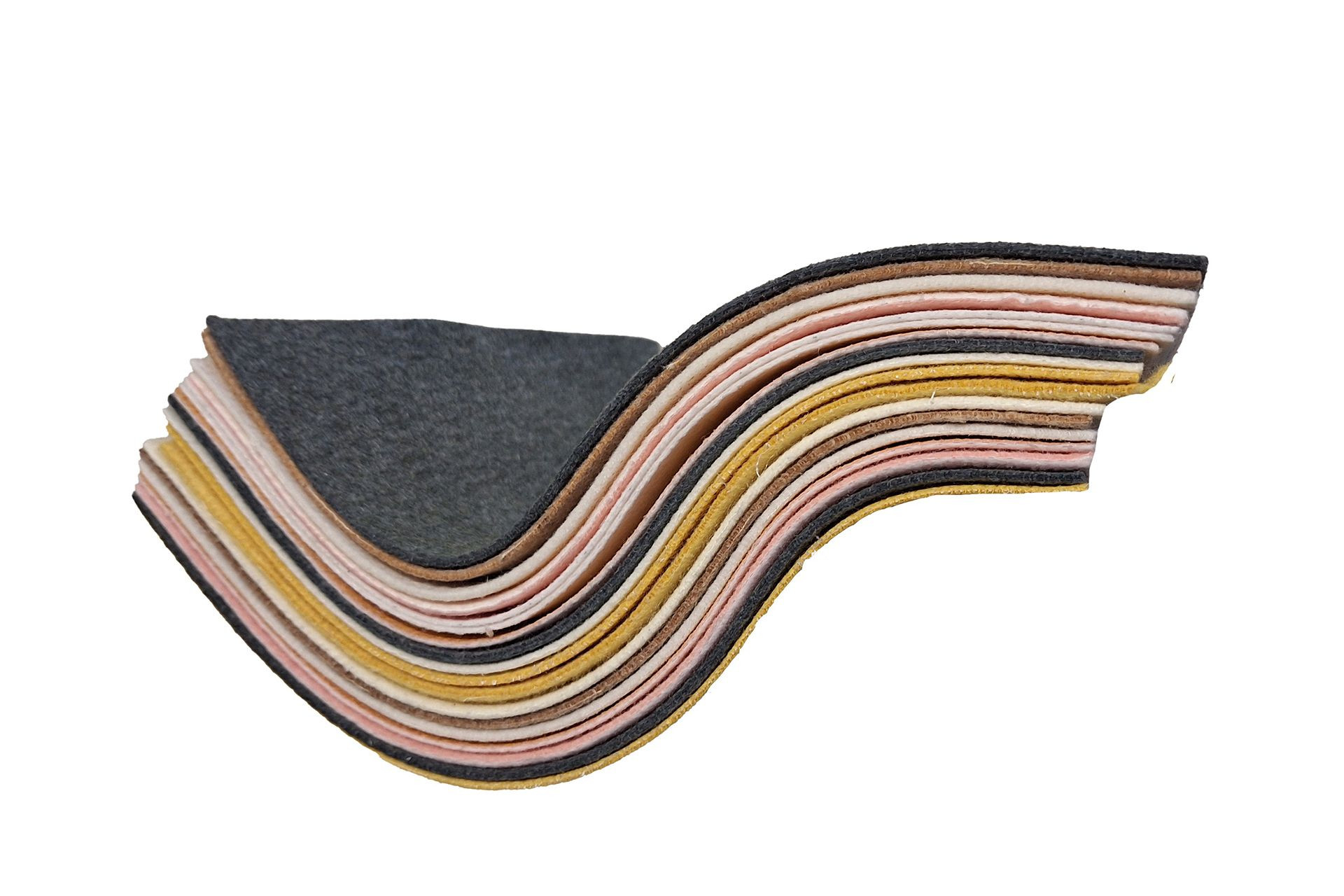
Fibres & Felts

Fibers, needlefelts and surface treatments for industrial gas filtration

Fibers and yarns are the base material of the final filter media used to manufacture needle felts for filter bags and pockets for industrial gas filtration. The nature of each single application, with its inherent process-related gas and dust composition, thermal and mechanical requirements, as well as targeted emission limitations, gives the framework for an appropriate fiber selection, closely tied to the specific application and operating conditions.

While the fiber determines the core physical and chemical properties, the needlefelt construction defines the final characteristics of the filter media, from filtration efficiency to durability in operation. Testori develops tailored needlefelt constructions, with and without scrim, engineered to combine textile flexibility with fine-tuned filtration properties, safely meeting the harshest process requirements and lowest emission values.

Beyond fibers and needlefelt construction, special surface treatments further tune the filter media to the specific conditions of the application, adding water and oil repellency, higher filtration efficiency, antibacterial properties or spark protection.

The Testori approach to filter media design

The final filter medium for gas filtration is designed on three technical layers: the fiber, the needlefelt construction and the surface treatment. The optimal choice is determined by extensive experience and a thorough understanding of the process, closely tied to the specific application and operating conditions.

Application-driven fiber selection

The nature of each single application, with its inherent gas and dust composition, as well as targeted emission limitations, gives the framework for an appropriate fiber selection. The available fiber portfolio provides a wide range of temperature and chemical resistances as well as specific filtration properties.

Optimized needlefelt construction

While the fibers determine the core physical and chemical properties, the needle felts are designed and constructed with different options that define the characteristics of the final filter media. Physical durability is merged with textile flexibility and fine-tuned filtration properties.

Targeted surface treatments

The specificity of the application conditions may also require the application of special treatments to the filter media, which Testori offers in a wide choice, targeted at specific performance objectives.

Fiber portfolio for gas filtration

Fibers are the base material of the final filter media used to manufacture filter bags and pockets. The Testori portfolio for industrial gas filtration includes Polypropylene (PP) for high-moisture applications, e.g. industrial dryers and chemical processes, galvanic treatment systems, etc.; Polyethylene Terephthalate (PES), the most widely used material for almost all ambient-temperature but also up to 150°C operational filtration tasks and applications for dust abatement and product handling systems, e.g. in cement, mining, steelworks and non-ferrous metal treatments, ceramics, wood, food and pharmaceutical, and Industrial Vacuum systems; Polyacrylonitrile (PAN) for cement and coal mills, power stations with FGD systems at low temperature, and dryer systems, etc.; and Polyphenylene Sulphide (PPS), the main material for large power stations with and without FGD upstream of filters, tail-end absorption filters for waste-to-energy plants, and cement kiln raw mill filters after GCTs, etc.

For the most temperature-demanding applications, the portfolio extends to Meta-aramid (PMIA) for cement, ceramics and asphalts; Polyimide (P84 - PIC) for the highest filtration performances in cement, waste-to-energy, power plants and metallurgical applications; Polytetrafluoroethylene (PTFE) mainly in waste-to-energy and special waste incineration, chemical industry, power station, cement and glass, with PTFE also covering pharmaceutical applications; and woven glass fiber with membrane (Silica) mainly for cement, selected steel applications and biomass power plants. Each fiber provides a specific range of temperature and chemical resistance as well as specific filtration properties due to its physical, fineness and structural characteristics.

Special felts

The Testori range of special felts covers a wide set of construction options, each engineered for a specific technical objective. From controlled low emissions to spark resistance, from antistatic conductivity to eco-friendly designs, seven felt families cover the main requirements of industrial gas filtration.

MICROFIBERS

Use of microfibres up to 0,9 dtex on the dust side, or alternatively of structured and multilobal sectioned shape fibres on the dust side. Available for PES, PAN, PPS and P84, delivering controlled low emissions, better efficiency and increased bag lifetime.

DURAtes

Use of microfibers for increased compactness and needling uniformity. Available for PES, providing controlled low emissions, increased bag lifetime and energy savings.

ANTISTATIC FELTS

Use of stainless-steel fibres in the scrim and/or blended in the fibre batt, or epitropic fibres, improve conductivity of the finished felt. Available for PP, PES, PAN, PPS and PMIA (m-AR), reaching surface resistivity below 104 Ohm.

SSB

Stratified structure with spark resistant polymer fibers mixed with finer and standard fibers on the dust side of the felt. Available for PES and PMIA (m-AR), providing increased resistance to sparks or other incandescent particles and longer sleeve durability.

BLEND

Use of a special blend of fibers optimized for asphalt production plants but also in various other applications. E.g. available for asphalt blend, delivering reduced cost of ownership.

COLORfelt

New eco-friendly felt for all industries, available in Nomex® 100% (PMIA – m-AR), combining sustainability with optimal performance.

MULTILAYERS

Multilayer construction with microfiber cap on the outside. Available for PES, PAN-PI, PPS-PI and PI (P84), delivering greater control over emissions, better efficiency and longer sleeve durability.

Special surface treatments

In addition to the traditional processes of heat setting, singeing and glazing, the felts can be treated with special bath, in-depth or surface treatments to become e.g. water and oil repellent, with increased wear resistance, supporting higher filtration efficiency, or functional effects like antibacterial properties or spark protection. A range of treatment options cover the main functional needs of gas filtration.

ePTFE MEMBRANE

Expanded PTFE membrane coating on the dust side. Available for PES, PAN, PPS, PMIA, GLASS and PTFE, delivering controlled low emissions and better efficiency.

KLEENTES

Bath impregnation available for PP, PES and PAN, providing water repellency, better cake release and suitability for sticky dust.

RHYTES

Deep bath impregnation of the felts available for PES, PAN, PPS, PMIA and P84, providing water and oil repellency, better cake release and suitability for sticky dust.

NOVATES

Polyurethane foam deep coating, suitable for continuous operating temperature up to 140°C. Available for PES, PAN and PMIA, delivering better filtration efficiency and very low emissions below 5 mg/Nm³.

RESILTES

Water-based silicone finishing. Available for PES, with special impregnations resistant up to 180°C and increased abrasion and strength resistance.

Needlefelt constructions

Once the fiber is selected, the construction of the needle felt shapes the behavior of the final medium during operation. The choice of dust-side fibres, batt composition, scrim and needling parameters determines how the medium balances filtration efficiency, physical durability and expected bag lifetime under the process conditions of each plant.

Testori develops tailored needlefelt constructions based on specific applications. Options include the use of microfibres up to 0,9 dtex on the dust side, structurized and multilobal sectioned shape fibres on the dust side, blends with epitropic or stainless-steel fibres in the scrim, stratified structures with pre-oxidized polymer fibers, special blends of fibers optimized for asphalt production plants, Nomex 100% eco-friendly felts, and multilayer constructions with microfiber cap on the outside.

Quality control and R&D laboratory

Quality control and R&D laboratory

Every fiber, needlefelt and treatment developed by Testori is characterized in the internal R&D laboratory before and after service life, verifying its response to the specific process conditions of the application. Dedicated quality controls at every stage of the production process ensure that each construction meets the properties defined at design stage.

For fibres and felts, the laboratory offer includes visual and dimensional analysis of the medium, evaluation of the dust content and residual permeability of the used felt, and assessment of the degradation of the filter medium fibers over service life, with a detailed report on the conditions of the sleeve and an estimate of its expected residual life.

The whole supply chain is covered, from fiber and yarn raw materials to the finished felt, ensuring full traceability and reliable filter- and life-time performance. Combined with the vertically integrated production, this capability allows Testori to guarantee that both the felt and finished product fully conform to specifications.

Frequently Asked Questions

Clear answers to the most common questions about industrial gas filtration, based on Testori’s consolidated experience.

The needle felt is designed and constructed with different options that define the characteristics of the final filter media. Testori develops tailored needlefelt constructions, with and without scrim, matching physical durability, textile flexibility and fine-tuned filtration properties to the specific process requirements and emission values of the plant.

Special felts are engineered when a standard construction cannot meet the target performance. Testori offers seven families: microfiber and multilayer constructions for controlled low emissions, antistatic felts for spark-sensitive environments, SSB stratified structures for spark resistance, BLEND for asphalt production plants, and COLORfelt in Nomex 100% as an eco-friendly option.

Testori offers five families of treatments, from ePTFE membrane coating for controlled low emissions and better efficiency, to treatments for water and oil repellency, better cake release and suitability for sticky dust, up to polyurethane foam and water-based silicone finishing for continuous operation up to 140°C and 180°C respectively.

Every fiber, needlefelt and treatment is characterized in the internal R&D laboratory, with visual and dimensional analysis, evaluation of the dust content and residual permeability, and assessment of the degradation of the filter medium. Dedicated quality controls cover the whole supply chain, from fiber and yarn raw materials to the finished felt, ensuring full traceability and reliable filter- and life-time performance.

The Testori portfolio for industrial gas filtration includes Polyethylene Terephthalate (PES), Polypropylene (PP), Polyacrylonitrile (PAN), Polyphenylene Sulphide (PPS), Meta-aramid (PMIA), Polyimide (PIC-P84), Polytetrafluoroethylene (PTFE) and woven glass fiber with membrane (Silica). Each fiber is chosen from a broad range of temperature and chemical resistance options, closely tied to the specific application and operating conditions of the plant.

Testori, the solution for every application

#test-us